

Cart
0
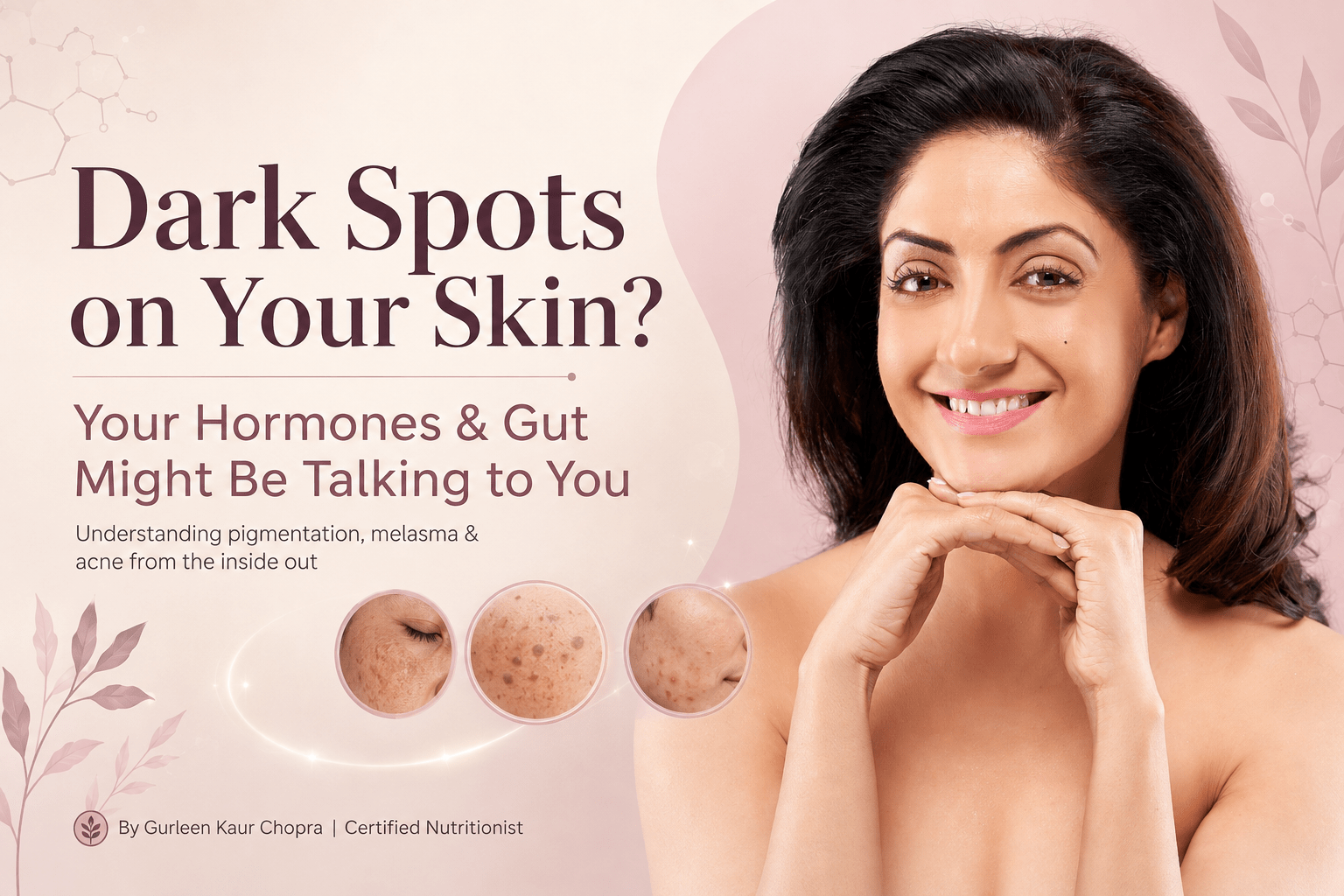
What if the skin you see in the mirror isn’t just a reflection but a conversation between your body and your soul?
The sunlight filters through the window, illuminating the faint outlines of dark spots on your skin. You touch your cheek, feeling the rough texture beneath your fingers, a reminder of the battles fought within. It's not just skin; it’s a story. A story of hormones dancing chaotically, of a gut struggling to maintain balance, of stress whispering dark secrets to your complexion.
Table of Contents
- What Are Dark Spots, Really?
- The Hormone-Skin Connection Nobody Talks About
- Why Your Gut Health Shows Up on Your Face
- Natural, Sustainable Ways to Support Even-Toned Skin
- FAQs
What Are Dark Spots, Really?
Dark spots, or hyperpigmentation, are more than mere skin blemishes. They are the result of melanocytes, those tiny pigment-producing cells, overreacting to hormonal signals, sun exposure, and stress. Imagine your cheeks, forehead, and neck as a canvas, each dark patch a brushstroke representing the internal chaos of your body. They emerge not just from sun exposure, as many believe, but often whisper of deeper issues like hormonal fluctuations and gut imbalance.
The Hormone-Skin Connection Nobody Talks About
Your skin is a sensitive storyteller, deeply influenced by hormonal changes. Think of it as a delicate orchestra, where every note must harmonize. When hormones swing — during cycles of stress, pregnancy, or conditions like PCOS — melanin production can spiral out of control, leading to those stubborn dark spots.
- Estrogen imbalance: When estrogen runs high, it can stimulate melanocyte activity, resulting in patchy pigmentation, particularly on your face.
- Insulin resistance: A common side effect of PCOS, it doesn't just affect your weight; it triggers uneven melanin production, leading to dark patches.
- Cortisol overload: Chronic stress elevates cortisol, wreaking havoc on your skin’s natural repair cycle, causing inflammation that darkens those spots.
If you notice pigmentation worsening with your cycle, it’s time to look beyond topical solutions. It’s a signal to delve deeper into your hormonal landscape.
Why Your Gut Health Shows Up on Your Face
Have you ever considered that your gut might be the unsung hero of your skin health? The gut-skin axis is a powerful connection, a dialogue that many overlook. When your gut is inflamed or imbalanced, it struggles to absorb the nutrients your skin desperately needs. Imagine your skin as a garden; without the right nutrients, it becomes overrun with weeds — dark spots being the unwanted guests.
In my consultations, we explore not just the skin but the gut too. We dive into digestion, bloating, and food sensitivities, understanding that healing the gut is essential for achieving that radiant, even-toned skin you desire.
Natural, Sustainable Ways to Support Even-Toned Skin
Here’s the truth: there are no overnight miracles. Real change comes from consistent effort. Here are some sustainable methods to nurture your skin:
- Feed your skin from the inside out: Embrace antioxidant-rich foods like amla, citrus fruits, and leafy greens. They are your body’s armor against oxidative stress.
- Support your liver's hormone clearance: Include cruciferous vegetables like broccoli and cabbage in your diet to help your liver metabolize excess estrogen.
- Heal the gut first: Incorporate probiotics and fiber-rich foods to repair your gut lining and reduce inflammation.
- Balance your blood sugar: Stable blood sugar levels mean stable insulin levels, which lead to fewer pigmentation triggers.
- Manage stress intentionally: Even 10 minutes of mindfulness can shift the cortisol levels that contribute to skin problems.
- Don’t skip sun protection: Sunscreen is your skin’s best friend, preventing existing spots from darkening further.
These practices aren’t just for your skin; they’re an invitation to a healthier lifestyle.
FAQs
Q1: Can dark spots really be caused by hormones?
Absolutely. Hormonal shifts significantly influence melanin production, especially during times of change like pregnancy or perimenopause.
Q2: How is gut health connected to skin pigmentation?
Your gut directly affects nutrient absorption and inflammation, both of which play crucial roles in skin health.
Q3: How long does it take to see improvement with a natural approach?
Most clients notice changes within 8-12 weeks of consistent effort. Remember, patience is key.
Struggling with pigmentation that just won’t budge? It might be time to look deeper — at your hormones and your gut. Book an online consultation with Gurleen Kaur Chopra, ISSA (USA) and CNM (UK) certified nutritionist, trusted by over 200,000 clients worldwide.

